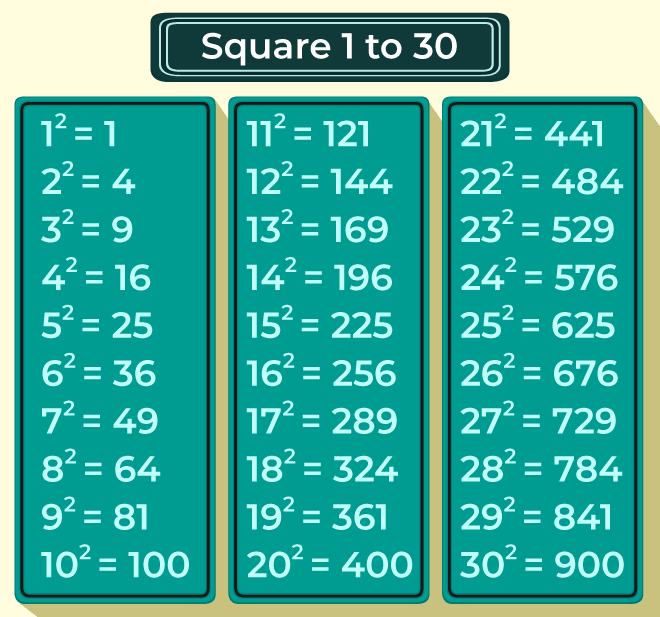
Easy Trick to Find the Square of Any 2-Digit Number In Seconds.

 SQUARE TRICK FOR ANY 2 DIGIT NUMBER 

Do you also find it difficult to calculate the square of large numbers? 🤔 If yes, then no need to worry anymore! In this blog, we are going to share a simple and fun trick that will help you find the square of any 2-digit number within seconds — and that too without using a calculator.

Whether you are a student, preparing for competitive exams, or just want to improve your calculation speed, this trick will be very helpful for you. So, let’s dive in and learn this smart math trick to make your calculations faster and easier! 🚀


What is a square number?

A square number or a number raised to the power of 2, is a number multiplied by the same number. 
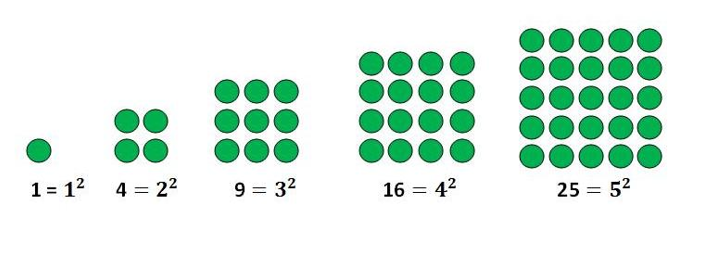
Squares of numbers : 1 , 2 , 3 , 4 , 5.


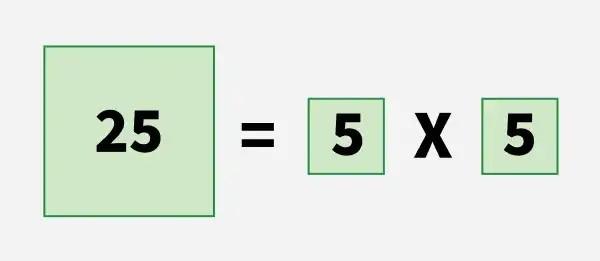
here we get the square of the number by multiplying the number with itself.

example - To get the square of number 5.


let a two digit number be " ab ". We have to find the square of the number i.e  " ab^2 ".

  1. Divide the number into 2 parts i.e a and b different.
  2. In second step we solve them as a^2   2 ab   b^2.
  3. Now after arranging them we get our answer.

ab^2


    a^2        2 ab      b^2     


Let's take an example to explain the trick :

1 .                          31^2

       Divide 3 and 1 in two parts .
       
Now, solve the these parts as -

             3^2     2*3*1      1^2

after solving we get -

             9          6             2

  Square of 31 is 962 .


2 .                     42^2

         Divide 4 and 2 in two parts .

Now, solve the these parts as -
          
          4^2      2*4*2       2^2

after solving we get -

           16          16          4

Here we see that 16 come in middle We have to write 6 and carry 1 to 16 i.e which is in front .

So, we get 
     
        17             6            4


We write two digit number only from front or first number otherwise we will carry it to other.
        
Square of 42 is 1764 .

   
Homework -

You can try solving these questions -
1) 87^2 
2) 22^2

Answer these questions in the comment section. 


I hope you like this article. Have a nice day .....


Comments

Post a Comment

Popular Posts

Lok Sabha vs Rajya Sabha: 20 Key Differences

Introduction India’s parliamentary system is one of the most searched topics in polity, especially for competitive exams like UPSC, SSC, and CET. The Indian Parliament consists of two houses — Lok Sabha and Rajya Sabha. Understanding the difference between them is crucial not only for exams but also for general awareness. In this blog, we will break down the top 20 differences between Lok Sabha and Rajya Sabha in simple language, making it easy to remember and revise. Lok sabha vs Rajya sabha  Lok Sabha vs Rajya Sabha (20 Key Differences) 1. Meaning Lok Sabha is the House of the People, while Rajya Sabha is the Council of States. 2. Type of Representation Lok Sabha represents the general public; Rajya Sabha represents the states and union territories. 3. Maximum Strength Lok Sabha can have up to 552 members, while Rajya Sabha has a maximum of 250 members. 4. Current Strength Lok Sabha has 543 elected members; Rajya Sabha has 245 members (elected + nominated). 5. Election ...

Fundamental Rights Of India In Detail | 6 fundamental rights of India

In a world where power can easily overshadow justice, Fundamental Rights stand as a shield—protecting individuals from oppression and ensuring dignity, equality, and freedom. These rights are not just legal provisions written in a constitution; they are the very heartbeat of a democratic nation. India, being the largest democracy in the world, has enshrined Fundamental Rights in its Constitution to guarantee that every citizen lives with respect, liberty, and opportunity. But what exactly are these rights? Why are they so important? And how do they impact your daily life? Fundamental rights  🌟 What Are Fundamental Rights? Fundamental Rights are basic human freedoms guaranteed to all citizens by the Constitution. They are essential for the overall development of an individual —physically, mentally, and morally. These rights are justiciable , meaning if they are violated, you can directly approach the court for justice. 📜 Why Fundamental Rights Matter Imagine a country ...

Fundamental Duties of Indian Constitution | article 51

The Fundamental Duties of India form an essential part of the Constitution, emphasizing that citizens must not only enjoy rights but also perform responsibilities towards the nation. These duties act as a moral compass, guiding individuals to contribute to the unity, integrity, and development of the country. They reflect the idea that a strong democracy depends not only on laws but also on responsible citizens who actively participate in nation-building. Historical Background of Fundamental Duties Originally, the Constitution of India did not contain Fundamental Duties when it came into force in 1950. However, during the period of internal emergency (1975–1977), the need was felt to include duties of citizens in the Constitution. The government appointed the Swaran Singh Committee , which recommended the inclusion of Fundamental Duties. Based on these recommendations, the 42nd Constitutional Amendment Act, 1976 inserted Part IV-A into the Constitution, introducing Fundamental Duti...

Sources of the Indian Constitution | Borrowed features of Indian Constitution

The Constitution of India is the longest written constitution in the world and reflects a unique blend of global ideas and Indian needs. It was not created in isolation; rather, it was carefully crafted by studying and adapting the best features from various constitutions and legal systems across the world. The makers of the Constitution ensured that these borrowed features were modified to suit India's historical background, diversity, and democratic aspirations. Introduction to the Sources of the Indian Constitution The Constitution was framed by the Constituent Assembly under the leadership of Dr. B.R. Ambedkar, who is regarded as the chief architect of the Indian Constitution. The drafting process took nearly three years, during which the Assembly analyzed several constitutions of different countries. Instead of copying directly, the framers adopted only those provisions that could work effectively in Indian conditions, ensuring both stability and flexibility in governance. SOU...

Fundamental Rights MCQ for Competitive Exams With Detailed Solutions | MCQ on fundamental rights

Fundamental Rights (Part III: Articles 12–35) are one of the most important topics in Indian Polity for all competitive exams like SSC, UPSC, Banking, Railway, and State PCS. अगर आप government job की तैयारी कर रहे हैं, तो यह topic आपकी selection में बहुत बड़ा role play कर सकता है। Questions concept-based भी आते हैं और direct factual भी। इस blog में आपको मिलेंगे: ✔ 50 MCQs ✔ Previous year questions in different exams ✔ Detailed explanations ✔ Easy + exam-oriented language Want to learn the Fundamental rights concept in detail? 👉 Click on the link and study the complete topic   fundamental rights mcq Fundamental Rights MCQ for Competitive Exams With Detailed Solutions - 1. Fundamental Rights are borrowed from which country? ➡ (SSC CGL 2019) A. UK B. USA C. Canada D. Australia Answer: B. USA Solution: India’s Fundamental Rights are inspired by the Bill of Rights of USA . These rights ensure liberty, equality, and justice. This is a very commonly asked conceptual ques...

All About president with tricks to remember

  All About president with tricks to remember ...

Indian Constitution Schedules Explained with trick to remember : Complete Guide in Easy Hindi + English (From Basics to Exam Mastery)

  ✨ Introduction (परिचय) The Indian Constitution is one of the longest and most detailed constitutions in the world. To manage such vast information, it includes Schedules (अनुसूचियाँ). 👉 What are Schedules? Schedules are like appendices or lists that contain additional details about laws, governance, and administration. 👉 Hindi में समझो: Schedules मतलब संविधान के अंदर ऐसे sections जहाँ extra details दी जाती हैं—जैसे list, rules, allocation, etc. 📌 Currently, there are 12 Schedules in the Indian Constitution. 📚 All 12 Schedules Explained (English + Hindi) 🟢 1st Schedule – States and Union Territories English: Contains the list of all states and union territories of India along with their boundaries. Hindi: इसमें भारत के सभी राज्यों और केंद्र शासित प्रदेशों की सूची और उनकी सीमाएँ दी गई हैं। 📌 Example: Delhi, Maharashtra, Uttar Pradesh, etc. 🟡 2nd Schedule – Salaries & Allowances English: Deals with salaries of constitutional authorities like the President, Governors, Jud...

Vice President of India­ | Vice President in Indian Constitution

1. Vice  President of India The Vice President of India is the  second-highest constitutional authority  in the country after the President. This post is created by the  Constitution of India  to ensure that there is always a responsible authority available if the President is unable to perform duties. The Vice President plays an important role in  both executive and legislative systems , but mainly works in the Parliament. He acts as a  bridge between the government and the Parliament , ensuring that discussions and laws are passed smoothly. The position also provides  continuity of leadership , especially during emergencies like death or resignation of the President. 👉  In short: The Vice President is a key constitutional post ensuring stability, continuity, and smooth governance. 2. Constitutional Articles (63–71) The role, powers, and responsibilities of the Vice President are clearly defined in  Articles 63 to 71  of the Const...